

The personalisation of cancer treatment
Better understanding of tumour biology is changing how many cancers are treated. Precision oncology enables treatments to be tailored to individual patients based on the biological characteristics of their tumour.
Article information and share options
This article was written
By
Cancer treatments are changing rapidly. Advances in surgery, radiotherapy and chemotherapy, newer approaches including targeted therapies and immunotherapy – alongside artificial intelligence – are supporting more personalised treatment pathways. Together, these developments are improving outcomes for selected cancers while changing how treatment decisions are made.
Why is cancer treatment becoming more personalised?
For decades, cancer treatment was based primarily on a tumour’s site of origin. Today, biomarker testing, molecular profiling and genomic sequencing are enabling treatments to be matched to the biological characteristics of individual tumours, and to guide treatment selection. As a result, patients with the same type of cancer may receive different treatments depending on its features.
The aim of personalised cancer treatment is to improve survival, reduce recurrence and preserve quality of life, by matching the right treatment to the right patient.
How are surgery, radiotherapy and chemotherapy improving?
Surgery, radiotherapy and chemotherapy remain the foundation of cancer treatment. Although these treatments are well established, they continue to improve through greater precision, less invasive techniques and better treatment planning.
Advances such as robotic and image guided surgery are helping surgeons remove tumours more precisely while reducing complications. Radiotherapy is becoming increasingly precise, allowing more targeted treatment of tumours while reducing damage to surrounding healthy tissue. New chemotherapy delivery systems and combination treatments are also helping target tumours more precisely while reducing side effects.
What are targeted therapies and immunotherapy?
Precision oncology is expanding treatment options by matching therapies to the biological features of individual tumours. Targeted therapies act on specific features that cancer cells rely on to grow and survive. They have transformed outcomes in selected cancers, including breast and lung cancers, and usage of these drugs in other cancer types continues to expand. As of 2025, more than 150 drugs have been approved in the US for over 400 treatment combinations across more than 30 cancer types.
Immunotherapy helps to prime and boost a patient's immune system to recognise and attack cancer. There are a wide range of modalities, including immune checkpoint inhibitors, therapeutic vaccines (e.g. mRNA vaccines), cell therapies (e.g. CAR-T and CAR-NK), and other approaches. CAR-T therapy is mostly being used in blood cancers, with 16 therapies approved globally.
Examples of a druggable cancer target with immunotherapy
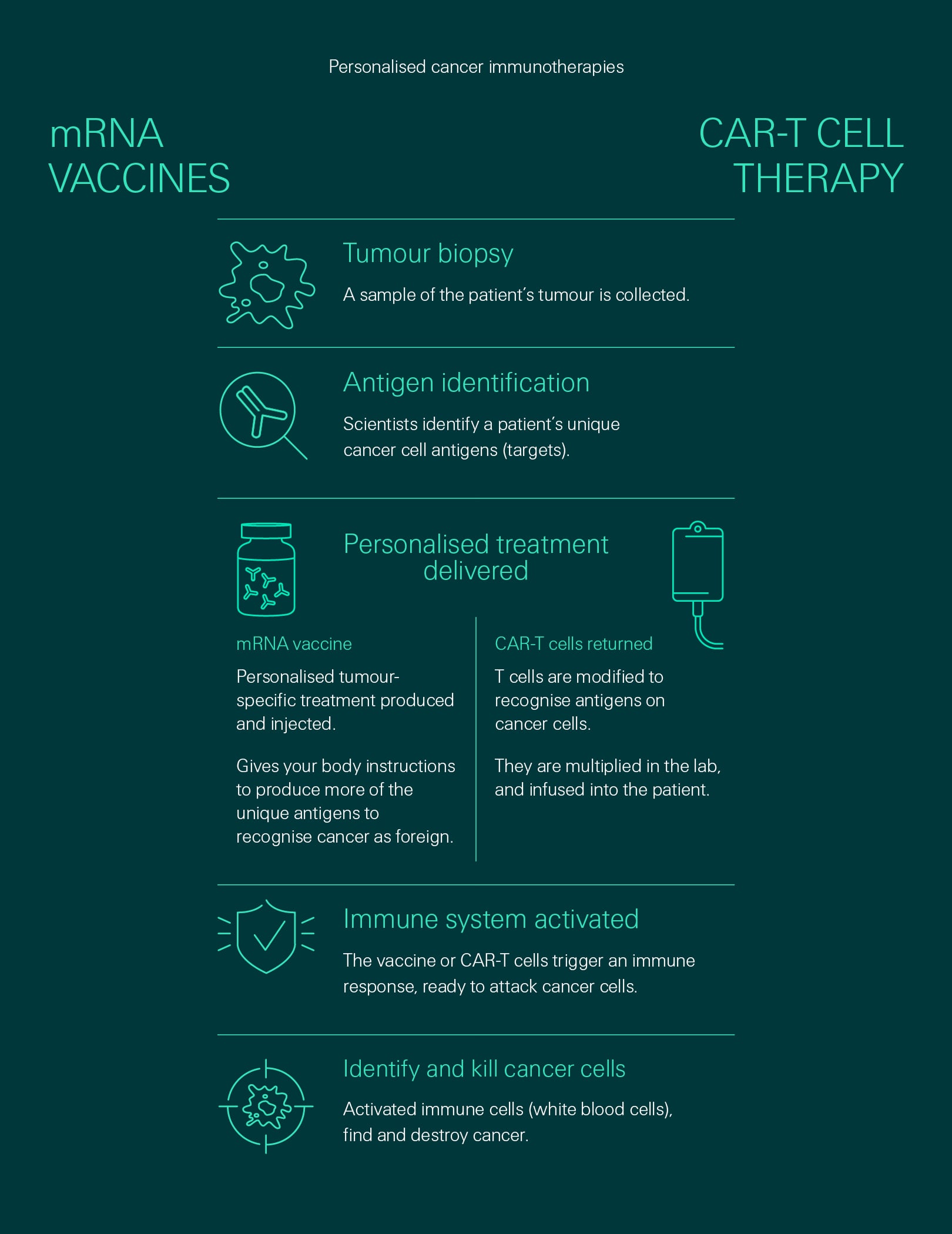
These approaches have improved outcomes for selected cancers, although benefits remain highly dependent on cancer type, stage, tumour biology and treatment access. Overcoming treatment resistance, managing side effects and expanding access remain important challenges.
How is artificial intelligence supporting cancer treatment?
AI is increasingly supporting several domains in cancer treatment. Its applications include accelerating drug discovery, supporting clinical trials, improving treatment selection and planning, predicting treatment response, and identifying patients most likely to benefit from specific therapies.
AI also has the potential to improve disease monitoring and make precision oncology more accessible through better use of routine clinical data. While its potential is considerable, evidence that AI improves long-term survival and quality of life is still forthcoming.
What does personalised cancer treatment mean for insurers?
Advances in cancer treatment are changing the outlook for many patients and creating new considerations for Life & Health insurers.
Cancer is a major driver of L&H claims. Earlier diagnosis and more effective treatments are improving cancer survival and reducing mortality for many cancers. While this is favourable for mortality portfolios, rising incidence, long-term prognosis, risk of recurrence, survivorship, and personalised and high-cost therapies may increase morbidity and medical claims.
Although current gains are strongest in cancers that have already benefited from major advancements including breast and lung cancer, future breakthroughs may come from cancers that remain difficult to detect and treat, such as pancreatic cancer.
L&H insurers will need to consider these changes in product design, underwriting and claims management.
Download the full report for a detailed analysis of the latest advances in cancer treatment and their implications for Life & Health insurers.
Tags
Authors

Minfu He

Prachi Patkee

Florian Rechfeld

Tobias Schiergens

