


04
AI and technology are changing life insurance distribution
5 minutes
Key Takeaways
Summary
AI and technology are changing how life insurance reaches people, from finding and engaging potential buyers to supporting advisers and making it easier to apply for insurance online. Over time, they could bring underwriting closer to the point of sale, create new ways for insurers to interact with customers directly and support ongoing engagement after a policy is issued. Human advice, however, remains important for complex financial decisions.
Key facts & figures
-
31% of reviewed AI and technology initiatives of leading insurers and intermediaries
Focus on engagement, servicing and retention
-
20% of reviewed initiatives
Relate to advice and quotation
-
AI may strengthen independent intermediaries
By reducing research and administrative burdens


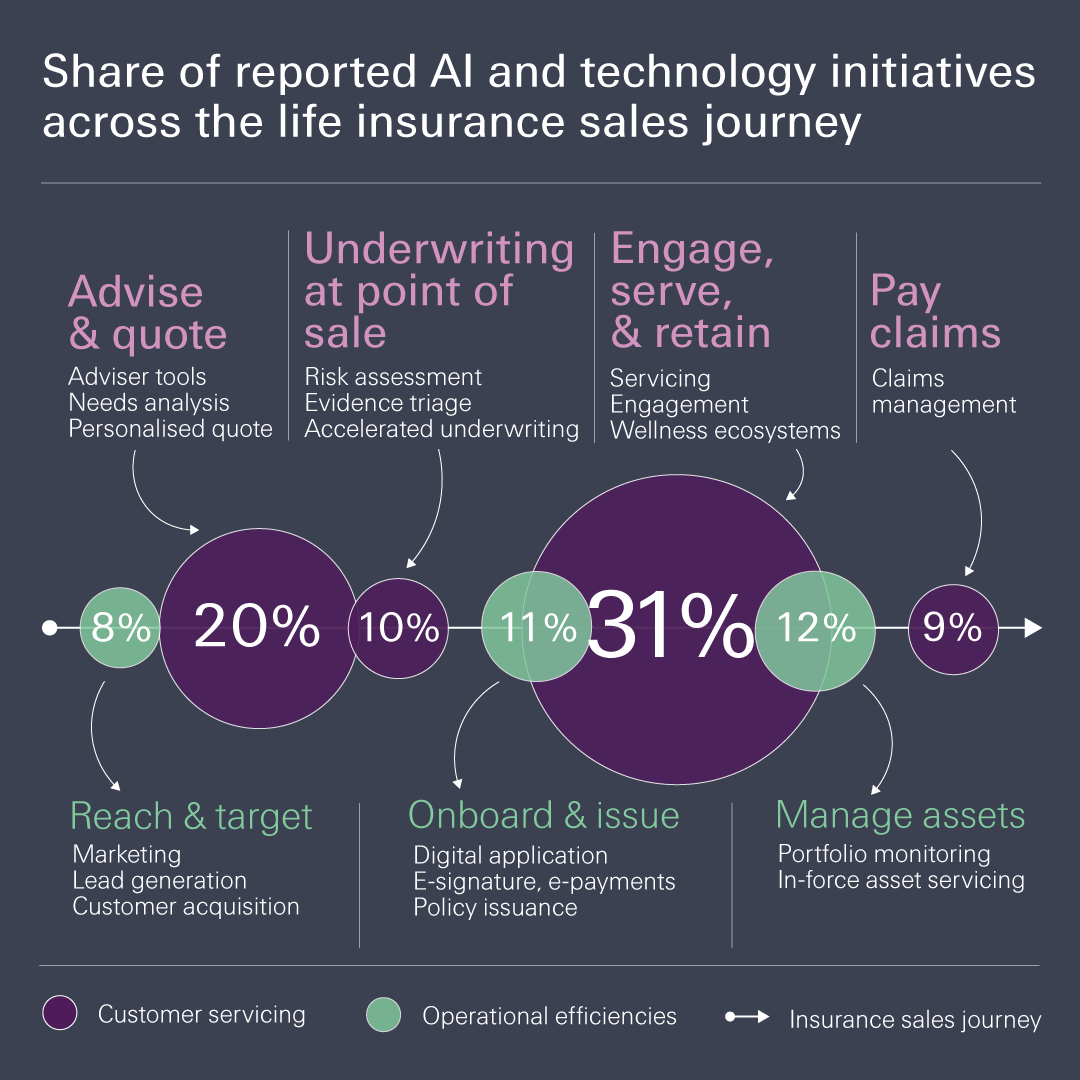
AI and technology are changing how life insurance is distributed. They can help insurers reach customers, support advisers, speed up underwriting and streamline digital onboarding. Over time, these capabilities could give insurers new ways to compete and engage people directly, increasing competition over who manages those relationships. Swiss Re Institute's review of 197 publicly reported AI and technology initiatives by leading global life insurers and selected intermediaries between 2022 and 2026 shows how technology is being used across different stages of life insurance, from advice and quotation to underwriting, servicing and claims. The largest share, 31%, relates to engagement, servicing and retention, followed by advice and quotation at 20%. For customers, these technologies can mean faster decisions, simpler processes and more personalised support.
Evolution of customer engagement in life insurance
AI in life insurance can strengthen existing distribution channels
AI in life insurance can help identify people more likely to buy insurance, support advisers during customer conversations and automate related administrative work. This can free up adviser time for customer-facing activities and allow more opportunities to be handled more quickly, with less administrative friction.
Independent insurance intermediaries may particularly benefit. Advisers working across multiple providers must compare products while managing significant information, compliance and administrative demands. AI-supported product research, comparison and administration can reduce these burdens, making multi-provider advice easier to deliver at scale.
For life insurers, ease of doing business is becoming increasingly important. In open distribution, insurers compete not only on product price and features, but on how easily their products can be researched, quoted, underwritten and administered.
Technology creates new ways to compete
Over time, technology can do more than improve existing processes. AI can bring life insurance underwriting decisions closer to the point of sale, while digital services can help insurers stay engaged with customers after a policy is issued, for example, through wellness programmes and other rewards. Faster underwriting can reduce the risk of applicants dropping out before a policy is issued, while staying connected after they buy insurance can give insurers more opportunities to support their changing health, protection and retirement needs.
Evolution of customer engagement in life insurance
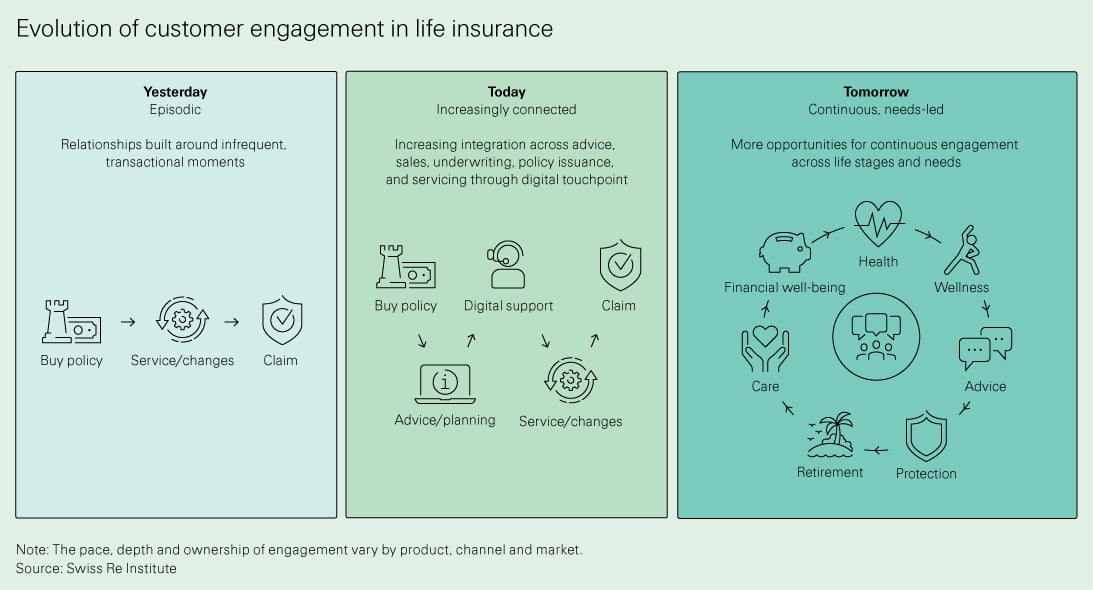
Digital channels can also allow insurers to interact more directly with customers, including those who have products from several providers. This increases competition between insurers, intermediaries and other distributors over who maintains the customer relationship and is involved in future financial decisions.
At the same time, AI is more likely to augment than replace human expertise. It can support product explanation, needs analysis and scenario analysis, while human judgement remains important for complex financial decisions. Human oversight also remains important where AI influences underwriting, recommendations or customer outcomes.
For life insurers, the opportunity is therefore not simply to automate distribution, but to combine technology with human expertise while strengthening their role across the customer journey.